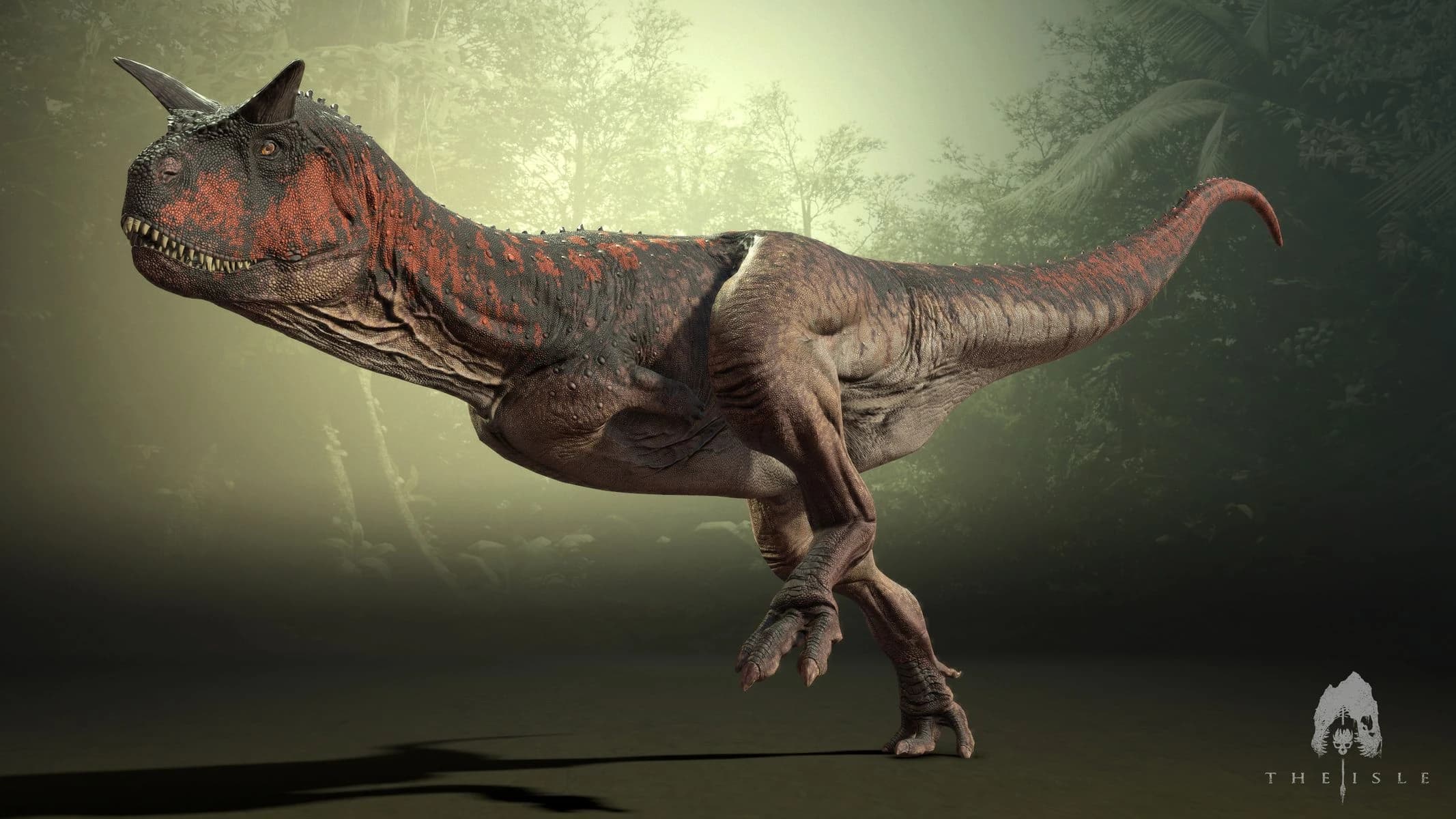
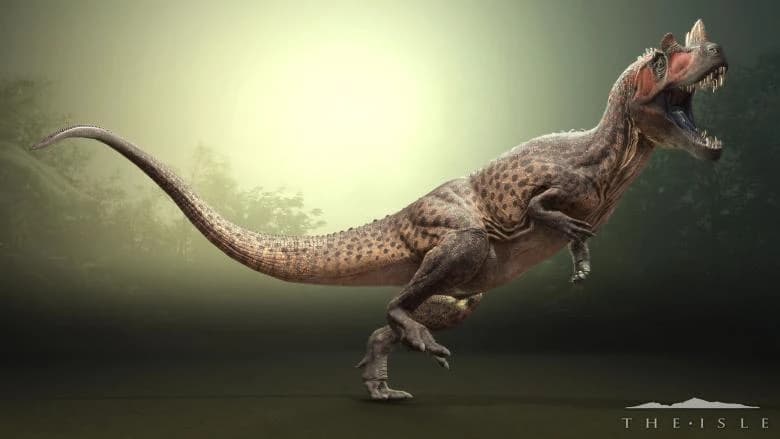
Ceratosaurus is a carrion bruiser built around rotten food, bacterial pressure, and close-range control. Bacteria values and charged-bite tuning are patch-sensitive, so focus on corpse control and choosing favorable trades.
How to play in 60 seconds
The complete loop, from leaving spawn to knowing when the hunt is over.
- 01
Use scent to locate carcasses, then circle before approaching; a body is often bait or already controlled by a stronger group.
- 02
Feed on appropriate rotten material to prepare bacterial pressure without overfilling or exposing yourself at the corpse.
- 03
Use the charged bite against a target committed to close range, then keep it moving until sickness changes the fight.
- 04
Hold the carcass only while your stamina, group position, and exit remain intact.
Controls & core tools
Learn what each input is for before trying to combine them in a fight.
Bite
A dependable close attack for short trades and directional pressure.
Charged bacterial bite
Builds a heavier bite and bacterial application; the charge announces commitment and must be timed.
Vomit
A species-specific utility available in current builds; confirm its current binding after custom key changes.
Grow without donating your run
Each stage changes how visible you are, what you can contest, and how far you can safely travel.
Juveniles should scavenge the edges of activity rather than contest the center of a carcass. Larger stages can defend food, but the smell and noise of that food continuously attract new threats.
- Reference maturity
- Variable — check the live server settings
- Planning principle
- Change your route as size, visibility, and matchup risk change.
Diet & feeding
The in-game diet panel remains the live source of truth.
- Rotten carcasses that support the bacterial mechanic
- Fresh diet targets when the approach is safe
- Bones and organs currently accepted by the live diet panel
- Small AI used between contested carcass fights
Abilities
Think of these as parts of one hunting loop, not isolated attacks.
Bacterial bite
Turns rotten-food preparation into sickness pressure on a target through successful bites.
Charged bite
Threatens a heavier close-range exchange when the opponent cannot safely step away.
Carrion tolerance
Allows Ceratosaurus to use food that other predators may avoid and build territory around carcass decay.
Weaknesses & counterplay
These are the moments when the correct decision is usually to reset or leave.
- 01
Preparing or holding a corpse broadcasts the location
- 02
Charged bites can be baited by faster opponents
- 03
Open pursuit is weaker than close carcass control
- 04
Bacteria setup loses value if the target can disengage and recover
Field strategy
Use this checklist before, during, and immediately after an encounter.
- 01
Circle a carcass before eating
- 02
Use mouth display and charge pressure to control space, not to freeze in place
- 03
Force movement after applying bacteria
- 04
Leave before a food contest becomes a multi-group siege
Ceratosaurus FAQ
Fast answers for the decisions players get wrong most often.
Is Ceratosaurus beginner friendly?
Moderately. It is durable, but the food and bacteria systems add decisions a new player must learn.
What should I learn first on Ceratosaurus?
Learn which carcass states build bacterial pressure and how the charged bite changes movement.
Is Ceratosaurus better solo or in a group?
Solo scavenging works; groups are stronger at carcasses but must avoid draining the same food and blocking bite angles.
Where can I find the current Ceratosaurus diet?
Open the in-game character panel after spawning. Diet targets can change between patches and community servers, so the live panel is more reliable than a fixed species list.