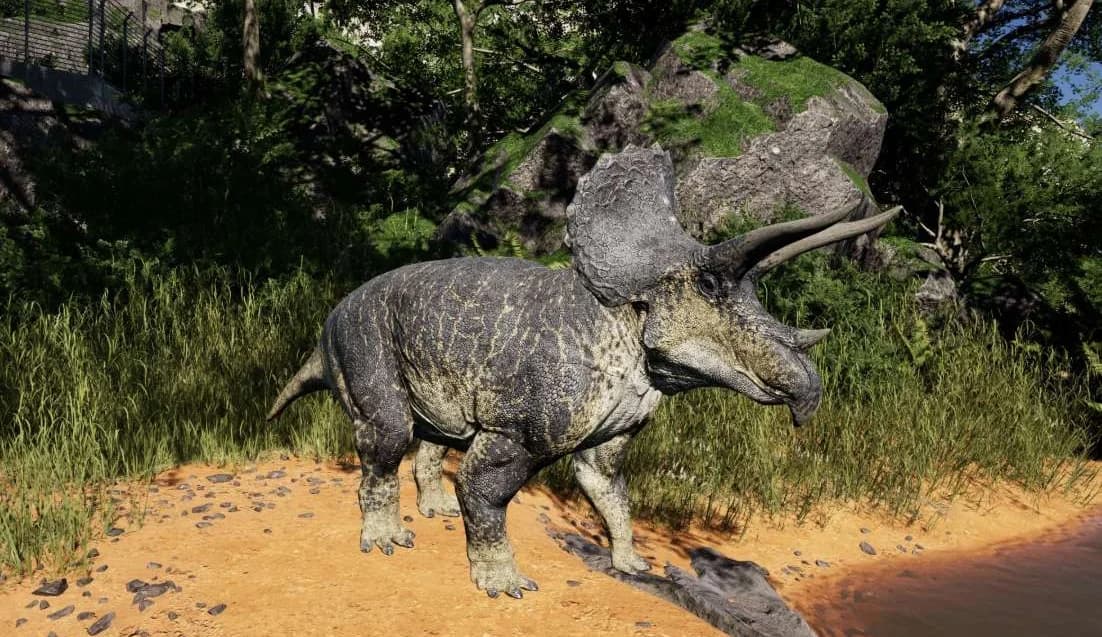
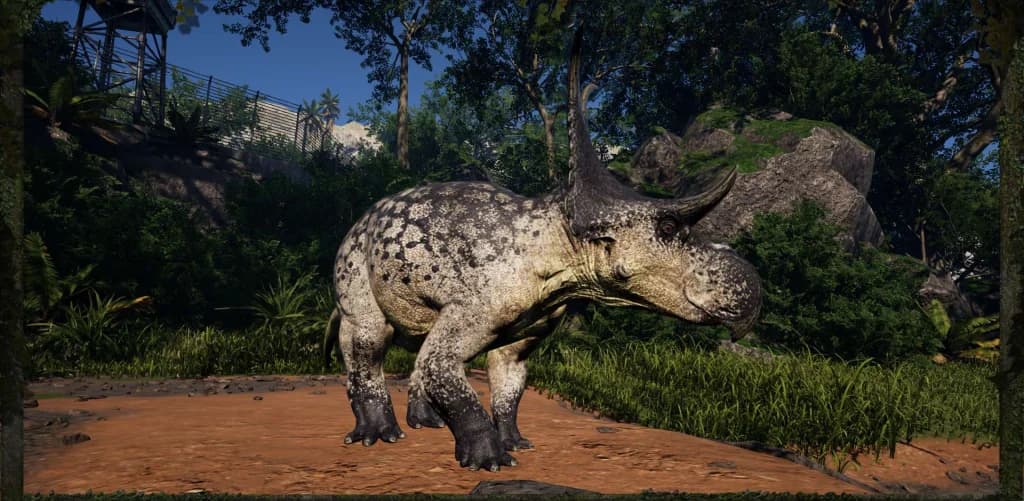
Diabloceratops is a compact horned defender with blocking, sparring, and crowd-control tools. Attack recovery and spar behavior change with balancing, but frontal discipline and stamina remain the stable fundamentals.
How to play in 60 seconds
The complete loop, from leaving spawn to knowing when the hunt is over.
- 01
Travel with open ground in front of the horns and avoid terrain that lets predators approach from above or behind.
- 02
Face the threat, enter the appropriate defensive or spar state before contact, and let the opponent spend the first commitment.
- 03
Use a shove, flip, or horn attack to create separation, then return to formation instead of chasing.
- 04
Protect stamina for the second attacker; carnivore groups often bait the first response.
Controls & core tools
Learn what each input is for before trying to combine them in a fight.
Horn attack
Controls the frontal lane and punishes an enemy that enters the head arc.
Block & brace
Improves the ability to receive pressure from the correct facing; it does not protect the rear.
Lock, push & thrash
Ceratopsian interactions used to contest another horned opponent or punish a committed contact.
Grow without donating your run
Each stage changes how visible you are, what you can contest, and how far you can safely travel.
Young Diablo should use herd cover and open visibility. As the horns and stability become relevant, practice holding a lane without burning all stamina on unnecessary sprints.
- Reference maturity
- Variable — check the live server settings
- Planning principle
- Change your route as size, visibility, and matchup risk change.
Diet & feeding
The in-game diet panel remains the live source of truth.
- Migration plants on the current diet panel
- Open forage routes with clear frontal sightlines
- Grazing only when travel to proper nutrients is unsafe
- Water approached with room to turn and block
Abilities
Think of these as parts of one hunting loop, not isolated attacks.
Frontal horn control
Makes a direct approach expensive when the player maintains facing.
Block & stability
Supports holding ground against crowd control from a known direction.
Sparring kit
Locking, pushing, flipping, and thrashing create a technical contest against other ceratopsians.
Weaknesses & counterplay
These are the moments when the correct decision is usually to reset or leave.
- 01
Rear pressure forces slow turns or a retreat
- 02
Holding block at the wrong time drains options
- 03
Spar mechanics demand stamina and matchup knowledge
- 04
Chasing breaks the protection created by the horns
Field strategy
Use this checklist before, during, and immediately after an encounter.
- 01
Make the predator cross the horn arc to reach you
- 02
Keep enough stamina to turn after the first contact
- 03
Use crowd control to disengage rather than overextend
- 04
In a herd, face different lanes instead of all watching one target
Diabloceratops FAQ
Fast answers for the decisions players get wrong most often.
Is Diabloceratops beginner friendly?
Moderately. The basic plan is clear, but block, spar, and directional attacks reward practice.
What should I learn first on Diabloceratops?
Learn the frontal hit arcs and how spar lock changes your controls.
Is Diabloceratops better solo or in a group?
A group covers the rear and is safest; solo play works when terrain prevents flanking.
Where can I find the current Diabloceratops diet?
Open the in-game character panel after spawning. Diet targets can change between patches and community servers, so the live panel is more reliable than a fixed species list.