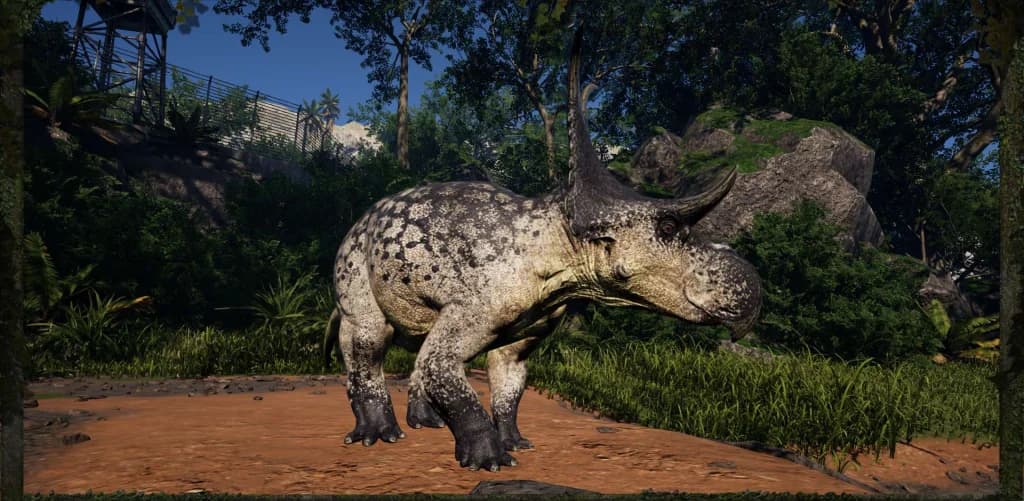
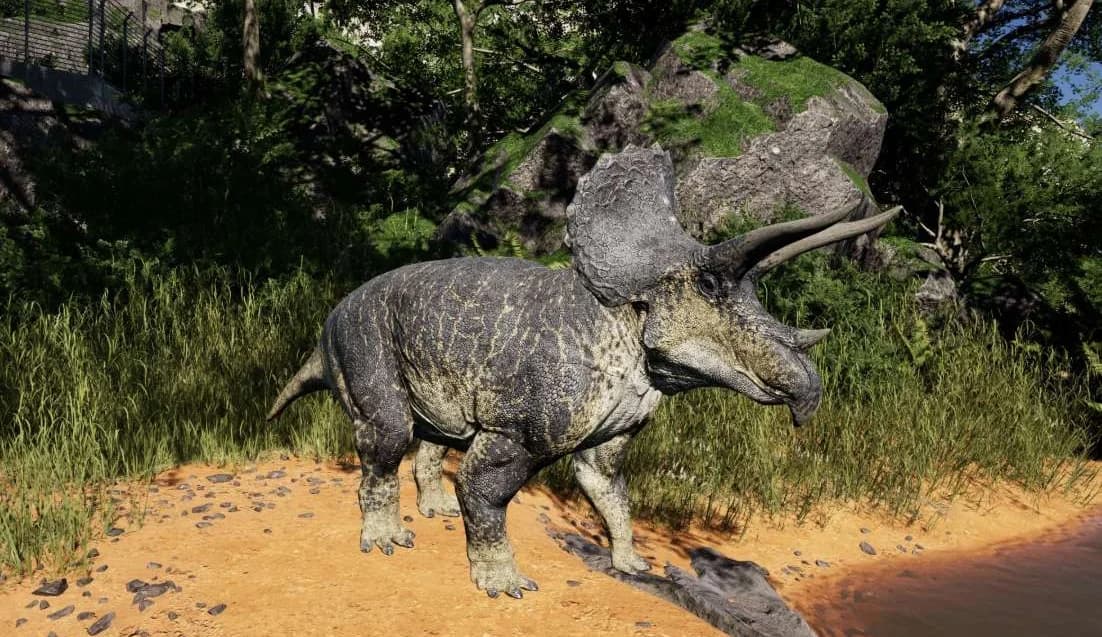
Triceratops entered the Evrima Public Branch in patch 0.20.109. It is an apex frontal defender with engage, directional, and spar interactions; exact crowd-control thresholds remain patch-sensitive.
How to play in 60 seconds
The complete loop, from leaving spawn to knowing when the hunt is over.
- 01
Grow along herd routes and open migration ground where the horns can face the approach before contact.
- 02
Hold the threat in the frontal arc and walk the formation toward safer terrain instead of turning the flank during a chase.
- 03
Use an engage or directional attack after the predator commits, then recover facing before a second attacker arrives.
- 04
Against another ceratopsian, learn the spar state before attempting flips, pushes, or thrashes in a real run.
Controls & core tools
Learn what each input is for before trying to combine them in a fight.
Horn attack
Responds to a selected frontal or side lane and punishes close pressure.
Engage
A committed frontal action used to meet an incoming target rather than chase one across the map.
Spar, push & thrash
Special interactions against compatible horned opponents; practice their stamina and recovery first.
Grow without donating your run
Each stage changes how visible you are, what you can contest, and how far you can safely travel.
The long lifecycle is most vulnerable before adult mass and horn control become reliable. Stay with a herd, avoid loud traffic hubs, and move feeding areas before predators can organize around you.
- Reference maturity
- Variable — check the live server settings
- Planning principle
- Change your route as size, visibility, and matchup risk change.
Diet & feeding
The in-game diet panel remains the live source of truth.
- Migration plants on the live diet panel
- Open forage routes shared with a disciplined herd
- Grazing only as an emergency hunger buffer
- Water with space for the whole body to turn before drinking
Abilities
Think of these as parts of one hunting loop, not isolated attacks.
Frontal horn defense
Creates a dangerous approach zone when the player preserves facing.
Engage attack
Meets a committed target with forward pressure and potential crowd control.
Ceratopsian sparring
Adds locks, pushes, flips, and thrashes to contests with compatible opponents.
Weaknesses & counterplay
These are the moments when the correct decision is usually to reset or leave.
- 01
The rear remains difficult to protect alone
- 02
Long growth makes every route mistake expensive
- 03
Heavy attacks and spar actions can consume recovery time
- 04
Large size turns narrow forests and steep banks into traps
Field strategy
Use this checklist before, during, and immediately after an encounter.
- 01
Face the attacker before it reaches sprint range
- 02
Use the herd to close rear lanes
- 03
Do not pursue a retreating predator into trees
- 04
Practice spar mechanics on a low-stakes server before risking an elder
Triceratops FAQ
Fast answers for the decisions players get wrong most often.
Is Triceratops beginner friendly?
No. The time investment and directional combat make it a poor first creature.
What should I learn first on Triceratops?
Learn the frontal attack arcs, engage recovery, and how to turn without exposing the flank.
Is Triceratops better solo or in a group?
A herd is safest and covers the rear; solo adults can hold open ground but are vulnerable to coordinated flanks.
Where can I find the current Triceratops diet?
Open the in-game character panel after spawning. Diet targets can change between patches and community servers, so the live panel is more reliable than a fixed species list.